Table of Contents
ToggleOrganization isn’t just about aesthetics, it’s about reclaiming usable space and making your home function better. Whether you’re tackling a garage overhaul, basement renovation, or closet cleanup, storage bins are the backbone of any solid organization system. Staples storage bins stand out because they’re affordable, durable, and come in sizes and styles that fit most budgets and spaces. This guide walks you through choosing the right bins, understanding what sets them apart, and putting them to work in every corner of your home.
Key Takeaways
- Staples storage bins offer an affordable middle ground between budget and premium options, with durable polypropylene construction that resists moisture, UV rays, and temperature changes—ideal for garages, attics, and basements.
- Clear plastic bins work best for visibility and frequent access, while heavy-duty opaque models are better suited for harsh garage and attic environments where durability and protection from light damage matter.
- Choosing the right bin size requires measuring your storage space, considering item capacity and weight distribution, and mixing bin sizes for more efficient organization than uniform sizing alone.
- Stackable designs maximize vertical space and help transform cramped areas into organized zones, but limit stacking to four bins high unless using industrial racks.
- A labeling system using specific descriptions—not vague terms—combined with photos saves time when retrieving items and prevents duplicate purchases or lost supplies.
- Proper placement with moisture control (bins on shelves, not concrete floors), air circulation gaps, and strategic use of clear versus opaque Staples storage bins determines whether your organization system functions long-term.
Why Staples Storage Bins Are Ideal for DIY Home Organization
When you’re organizing a home, you need containers that actually work. Staples storage bins deliver on three fronts: durability, affordability, and variety. Unlike bargain bins that crack after one season in the garage or premium options that strain your wallet, Staples bins hit a practical middle ground.
They’re made from heavy-duty polypropylene plastic that resists moisture, UV rays, and temperature swings, critical when stashing items in attics, basements, or outdoor sheds. The lids seal tightly (though not airtight), which keeps dust and pests out without requiring special equipment. Many models feature stackable designs that let you maximize vertical space, turning an awkward corner or closet shelf into organized layers.
For DIYers, Staples bins work because they’re straightforward. No assembly, no complicated latching mechanisms, no mystery dimensions. You grab them, load them, label them, and move on to the next project. They’re also affordable enough that you can buy in quantity, essential when you’re outfitting an entire attic or workshop.
Types of Staples Storage Bins to Consider
Clear Plastic Bins for Easy Visibility
Clear plastic bins are the workhorse of organization. You can see exactly what’s inside without opening every container, saving time when you’re hunting for holiday decorations, seasonal clothing, or spare hardware. Staples’ clear options range from small 5-gallon totes (roughly 11″ × 9″ × 8″) to large 50+ quart containers (typically 28″ × 18″ × 12″ or similar). Visibility matters especially for craft supplies, sports equipment, and items you rotate seasonally.
The clarity also makes labeling easier. A printed label on a clear bin is immediately readable from across the room. These bins typically weigh less than opaque versions, so moving them around during renovations or reorganization isn’t as grueling. One trade-off: sunlight can degrade the plastic over time, so avoid long-term outdoor storage without UV-protective covers.
Heavy-Duty Containers for Garage and Attic Storage
Garage and attic environments demand tougher bins. Staples’ heavy-duty models come in opaque gray or black plastic, which also hides dust and grime better than clear versions. These bins handle temperature fluctuations, moisture from humidity, and the occasional impact from a dropped tool. Look for reinforced handles and thicker walls, usually around 0.15″ thick versus standard 0.10″ in lighter models.
Garage storage often involves power tools, engine oil cans, or workshop clutter that benefits from heavy-duty containers for garage and attic storage. You’re protecting both the items inside and the storage system itself. Attic bins similarly need durability since they sit in temperature extremes, freezing winters and sauna-like summers. The opaque color also means you can’t accidentally store temperature-sensitive items (like paint or certain plastics) without realizing the risk.
How to Choose the Right Size and Capacity
Size matters, and this is where many people stumble. Too many bins that are too small and you’ve wasted money and shelf space. Too few giant bins and you can’t move them. Here’s a practical framework.
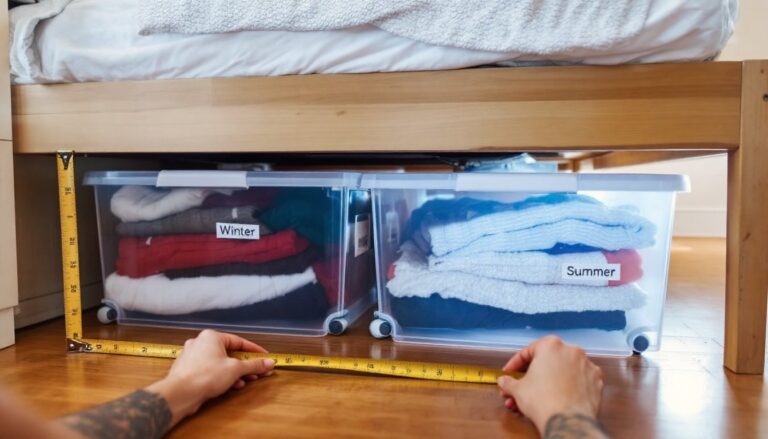
Start by measuring your storage space. If you’re filling a shelf in a linen closet, work backward from the shelf dimensions (width, depth, height). A standard 16-quart bin (roughly 17″ × 11″ × 7″) typically fits two-wide on a 36″ shelf with room to spare. For attics with exposed joists, consider weight distribution: smaller bins spread the load more evenly across floor framing than a few massive containers.
Capacity should match the items you’re storing. Seasonal clothing fills volume quickly, so larger bins make sense. Sports equipment varies, footballs and helmets pack inefficiently into giant containers, while holiday decorations (lights, wrapping paper, ornaments) benefit from 40+ quart sizes. Workshop supplies, nails, screws, fasteners, pack dense, so even smaller bins stay heavy.
Stackability is another practical concern. If you’re stacking bins, the bottom tiers will compress slightly under weight. Don’t stack more than four-high unless you’re using purpose-built industrial racks. Also, understand that nominal versus actual dimensions matter: a 50-quart bin might measure 17″ × 14″ × 11″ but the manufacturer’s stated capacity refers to liquid volume, not the usable interior space after the lid seal takes up a quarter-inch.
One more tip from storage organization guides: mix sizes. A combination of medium and large bins lets you organize more efficiently than uniform sizing. Small bins for delicate items, large bins for bulk storage, that’s how professionals do it.
Organizing Your Home With Staples Storage Solutions
Organization succeeds or fails based on whether the system is usable after you set it up. Staples bins are tools, not decoration, so treat them functionally.
Closets and Linen Rooms: Use clear bins for seasonal clothing or off-season bedding. Label the front and spine so you can read labels even when bins are stacked. Stack no higher than eye level for frequent access items: reserve top shelves for rarely-used storage.
Basements: Basements mean moisture concerns. Ensure bins have tight-fitting lids and sit on shelves or pallets, never directly on concrete floors where moisture wicks up. Use opaque bins if possible to protect items from light. If stacking in a damp basement, leave a small gap between the bin and the wall for air circulation. Heavy-duty models from Staples withstand moisture better than lightweight alternatives.
Garages: Workshop bins benefit from stackable storage solutions that let you vertically organize power tools, fasteners, and supplies. Use clear bins for items you grab frequently, router bits, sandpaper grits, electrical connectors. Keep a master inventory list (physical or digital) if you store expensive tools or hardware in multiple bins.
Attics: Temperature swings are the enemy here. Don’t store paint, adhesives, or temperature-sensitive electronics in attics unless bins are in climate-controlled areas. Use opaque bins to block sunlight and heat damage. Label everything because retrieving items from attics is slower than from basements or closets, you need to know what’s up there before climbing the ladder.
Craft and Hobby Spaces: Crafters benefit from craft storage containers for organizing supplies. Clear bins let you see yarn, fabric, beads, or paint without opening every container. Smaller to medium bins work better here since you’re often pulling specific colors or materials. Stackable designs free up floor space in tight creative areas.
Labeling System: Don’t skip this. Use a label maker (thermal or adhesive labels) and write contents clearly, not “stuff” or “misc,” but “summer holiday decorations, lights & wrapping” or “power drill bits, 1/4″ to 1/2″.” Take photos of bins before stacking them if the contents aren’t obvious. That habit saves hours hunting later.
Conclusion
Staples storage bins aren’t glamorous, but they’re reliable workhorses that transform cluttered spaces into functional zones. By choosing the right types, clear for visibility, heavy-duty for harsh environments, and sizing appropriately, you create an organization system that actually lasts. Pair these bins with thoughtful placement and clear labeling, and your garage, attic, closet, and storage areas become assets instead of problem areas. When your next home project rolls around, you’ll know exactly where everything is.