Table of Contents
ToggleA firearm stored in the bedroom keeps defensive capability within arm’s reach during the hours when homeowners are most vulnerable. But, accessibility and security create a genuine tension: the gun must be quickly reachable in an emergency, yet secured against unauthorized access, especially if children or guests are present. Hidden gun storage solves this dilemma by placing firearms where they’re tactically positioned but concealed from casual observation. This guide covers practical, installation-friendly storage solutions that balance ready access with child safety and discretion, helping homeowners make informed decisions about their bedroom defense strategy.
Key Takeaways
- Hidden gun storage in the bedroom balances quick defensive access with child safety and security by keeping firearms concealed yet within arm’s reach during vulnerable nighttime hours.
- Three main bedroom hidden gun storage solutions are under-bed safes (capacity and partial concealment), nightstand lockboxes (fastest arm’s-reach access), and wall-mounted hidden safes (true concealment but slower deployment).
- All bedroom firearm storage must be securely anchored to prevent theft and tipping, with biometric and keypad locks tested repeatedly under stress conditions to ensure reliable 3–5 second deployment.
- Before installation, verify your jurisdiction’s gun storage laws, map electrical wiring and plumbing in wall studs using a wire-detection stud finder, and use cardboard templates to prevent costly cutting errors.
- Maintain bedroom gun safes with silica gel desiccants to prevent rust and corrosion, keep ammunition in a separate lockbox when legally required, and document all lock codes and backup key locations in a secure location outside the bedroom.
Why Hidden Gun Storage Matters in Your Bedroom
Bedroom firearm storage isn’t just about convenience, it’s about layered home security. Statistics show that most home invasions occur between 6 PM and 6 AM, when families are home and likely sleeping. A gun stored in a nightstand or under the bed puts defensive capability within seconds of reach, but visible firearms in the bedroom create liability risks and can signal to burglars that valuable items (and weapons) are present.
Hidden storage removes that visual advertisement while maintaining quick access. A loaded pistol in a concealed safe next to the bed is faster to deploy than one locked in a garage closet, and the concealment prevents guests, repair workers, or household members unfamiliar with gun safety from accidentally encountering it.
Child safety is equally critical. A homeowner with kids or frequent young visitors must meet two demands: the gun stays secured against unsupervised access, and the owner can still draw it in seconds during a genuine threat. This isn’t a compromise between safety and security, it’s both. States like California, Connecticut, and New York have specific storage laws: many jurisdictions recommend secure storage regardless of legal mandate. Research the code in your area before installation.
Top Hidden Gun Storage Solutions for Bedrooms
Under-Bed Safe Drawers
Under-bed gun safes are among the simplest and most accessible hidden storage options. These are typically low-profile, sliding drawer units that fit under a standard bed frame or sit on the floor beneath the bed, offering quick access without floor space sacrifice.
Construction and Access: Most under-bed safes use a locking mechanism (biometric fingerprint, keypad, or mechanical key) and slide out on ball-bearing runners for smooth extension. Models range from basic key-lock designs to advanced biometric units that unlock in 0.5–1 second via fingerprint recognition. Quality matters here, cheap runners jam, and poor locks rust.
Pros: Fast deployment, fits under most bed frames, storage for multiple firearms and ammunition, less visible than nightstand safes. Cons: Requires bending or rolling out of bed to access (slower than arm’s-reach), can be discovered during housekeeping or repairs, and some models collect dust or obstruct under-bed airflow.
Installation: Most under-bed safes need no permanent installation, they’re simply placed under the bed. Heavier units (30+ lbs) benefit from anchor straps bolted to the bed frame to prevent sliding during movement. Ensure the safe doesn’t impede mattress ventilation or create a tripping hazard on entry/exit sides.
Nightstand Lockboxes
Nightstand safes are compact, tabletop boxes designed to sit on or inside a nightstand drawer. They’re the most accessible bedroom storage option for ready-draw scenarios.
Build: Typically 6–12 inches wide, these boxes are made from welded steel with biometric, RFID, or keypad locks. Models like the Hornady RAPiD Safe or SentrySafe Gun Safe use capacitive-touch keypads that unlock in under a second and can be mounted inside a drawer or mounted flush to the underside of a tabletop. Some premium models include LED indicators and backup battery ports.
Pros: Arm’s reach while sitting or lying in bed, quick draw capability, small footprint, available in stylish finishes that blend with bedroom furniture. Cons: Visible if the drawer is open, smaller capacity (usually one handgun), can be reached by curious children if the lock fails, and expensive models range from $150–$400+.
Mounting: Nightstand lockboxes can sit free on a surface or be anchored to a wooden nightstand via lag bolts through pre-drilled holes. If mounting inside a drawer, ensure the drawer doesn’t accidentally lock the safe shut and that power cords (for biometric lights and backups) are accessible. Test the unlock mechanism repeatedly before relying on it during stressful situations.
Wall-Mounted Hidden Safes
Wall-mounted hidden safes blend storage with concealment, mounted between wall studs and hidden behind a picture frame, mirror, or decorative panel.
Construction: These safes sit in the cavity between standard 16-inch-on-center wall studs (the typical spacing in most homes). The safe body is roughly 12–14 inches tall and 8–10 inches wide, fitting snugly in the stud bay. Access is disguised behind a hinged picture frame, small mirror, or custom bezel that swings open to reveal a biometric or keypad lock. Interior dimensions allow storage of one or two handguns, documents, or cash.
Pros: True concealment, out of sight during home sales or casual visits, space-efficient, dual-purpose décor. Cons: Requires wall studs in the right location (not always near the bed), installation involves cutting drywall and patching, slower access than arm’s-reach storage, and some studs contain electrical wiring or plumbing (studs near corners and near bathrooms are riskier).
Installation Considerations: Before cutting, use a stud finder with wire detection to map studs and verify no electrical lines, water pipes, or HVAC ducts occupy the space. Studs are typically located 16 inches apart: measure from corners or door frames to find them accurately. Cut a hole sized for your safe using a drywall saw, carefully noting that studs sit 1.5 inches deeper than the drywall face. Once the safe is installed and the frame hinged, patch the drywall edges with joint compound and paint or finish to match. The entire job takes 3–4 hours for a skilled DIYer: amateurs should budget 5–6 hours or call a carpenter.
Installation Tips and Best Practices
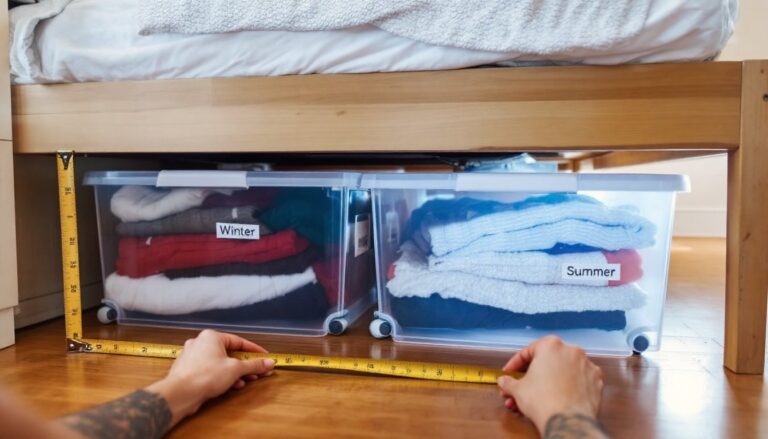
Measure Twice, Cut Once: Hidden gun storage errors are expensive. Before cutting drywall or drilling into furniture, measure the safe’s exact dimensions (width, height, depth) and create a cardboard template. Mount the template on the wall or nightstand to confirm clearance, sight lines, and access paths. This takes 15 minutes and prevents cutting mistakes.
Secure to Structure: Every safe must be anchored to prevent theft or tipping. Under-bed safes should be bolted to the bed frame with lag bolts (3/8 inch diameter) or strapped with steel cable: nightstand models need L-brackets and wood screws into the nightstand frame (not drywall): wall safes must be bolted into studs with heavy-duty anchors. A safe sitting freely is theft-bait and a tipping hazard.
Test Access Under Stress: Biometric and keypad locks perform differently when you’re sleep-deprived, injured, or adrenaline-spiked. Spend at least a week using your chosen lock while sitting in bed in the dark, with eyes closed, at various times of day. If you can’t reliably unlock it within 3–5 seconds using muscle memory alone, choose a different lock type or practice more. This isn’t paranoia, it’s the difference between effective self-defense and a heavy paperweight.
Mind Building Codes and Permits: Wall-mounted safes require drywall cutting, which may trigger permit requirements in some jurisdictions if the work affects structural integrity or fire-rated walls (particularly between units in apartments or duplexes). Call your local building department before cutting. Mechanical fastening into studs is always safe, but check local codes anyway.
Keep Ammunition Separate (When Legal): Some jurisdictions require ammunition stored separately from firearms. Even if not mandated, storing a spare magazine or loose rounds in a separate small safe adds a safety layer and complicates rapid access for unsupervised people. Use a small lockbox on a shelf or inside a drawer for ammo.
Environmental Factors: Bedrooms experience humidity, temperature swings, and dust. Safe interiors should include a silica gel packet or rechargeable desiccant to prevent rust and lock corrosion. Replace or recharge desiccants every 3–6 months. Never use a bedroom safe in a humid climate without ventilation, corrosion ruins locks and firearms. If your bedroom is damp, run a dehumidifier or choose a safe with an interior drain port.
Document Your System: Write down lock codes, fingerprint enrollment steps, and backup key locations. Store this information in a separate secure location (a safety deposit box, not your nightstand drawer). In an emergency, a confused family member or first responder may need quick access to your firearm: proper documentation saves lives and seconds.
Conclusion
Bedroom hidden gun storage isn’t a luxury, it’s a thoughtful intersection of home defense and household safety. The best solution depends on your bedroom layout, access speed priorities, and budget. Under-bed safes offer capacity and partial concealment: nightstand boxes deliver arm’s-reach access: wall-mounted safes provide true invisibility. Whatever you choose, anchor it securely, test it obsessively, and maintain it like any other critical safety tool. Your firearm is only useful if you can access it reliably when it matters most.