Table of Contents
ToggleUnder the bed is often the most overlooked real estate in any bedroom. It’s prime territory for DIY under bed storage, dark, dusty, and usually just home to forgotten items and dust bunnies. But with the right approach, that wasted space can become a powerhouse for seasonal clothing, extra bedding, shoes, and more. Whether you’re working with a platform bed, a traditional frame with legs, or something in between, smart under bed storage keeps your bedroom organized without eating into your floor plan. This guide walks through seven practical solutions, from rolling bins to custom sliding drawers, all designed for homeowners who want function without sacrificing their budget or sanity.
Key Takeaways
- Measure your under bed clearance (typically 8–20 inches) before purchasing storage solutions, accounting for obstacles like outlets, vents, and furniture placement to ensure proper fit.
- Rolling bins with quality dual-wheel casters and polypropylene construction are affordable workhorse solutions, costing $25–$60 per unit and perfect for DIY under bed storage without building skills.
- Custom sliding drawers on ball-bearing slides offer a more permanent, finished alternative that requires 6–8 hours of work but provides better protection and durability for heavier loads.
- Organize seasonal items (winter coats, summer linens, holiday decorations) in labeled containers with inventory lists, rotating every 6 months to prevent long-term storage forgotten items.
- Place frequently accessed items toward the bed opening and rarely used items deeper under the bed, using dividers or smaller containers to prevent items from shifting and getting lost.
- Keep moisture barriers (cardboard or plastic sheets) under containers, add desiccant packs inside sealed containers, and use cedar blocks or lavender sachets to prevent mildew and deter pests during storage.
Assess Your Under Bed Space
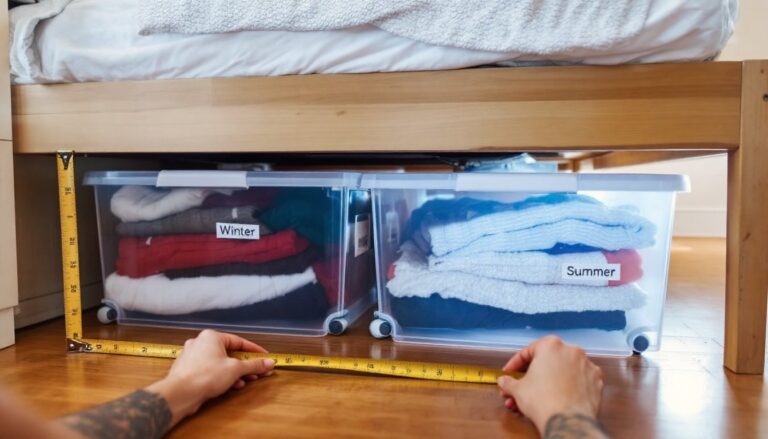
Before you buy anything or swing a hammer, measure your under bed clearance. Grab a tape measure and check the height from the floor to the bottom of your mattress at multiple points, especially near the headboard and footboard, since bed frames often slope slightly. Note the length and width of the usable space, and jot down whether your bed has legs, wheels, or a solid platform. Check for obstacles like electrical outlets, HVAC vents, or baseboard heaters that might limit what you can fit.
Clearance typically ranges from 8 to 14 inches on standard platform beds, and 10 to 20 inches on frame-and-box-spring setups. If you have less than 8 inches of clearance, you’ll be limited to flat storage boxes or sliding drawers specifically designed for tight spaces. Also walk around the bed and see how accessible each side is. Can you easily slide things out, or is one side blocked by a wall or furniture? Your answers will shape which storage solution makes the most sense.
Rolling Storage Containers and Bins
Rolling bins are the workhorse of under bed storage. They’re affordable, widely available, and don’t require any building skills. Look for containers that are shallow enough to fit your clearance height but large enough to hold a meaningful volume. Polypropylene or polyethylene plastic bins in clear or opaque finishes are durable and easy to wipe clean.
When shopping, pay attention to wheel quality. Cheap plastic wheels will stick and jam on carpet or hardwood. Instead, choose bins with dual-wheel casters designed for smooth rolling on typical flooring. The wheels should swivel easily and lock in place so bins don’t creep out on their own. Most quality rolling bins cost between $25 and $60 per unit, depending on size and construction.
Choosing the Right Size and Material
Bin depth is critical. A depth of 16 to 20 inches fits most under bed spaces without forcing you to squeeze or hunch over while loading and unloading. Width varies, but 24 to 30 inches typically works for the length of the bed. Avoid bins that are 24+ inches deep unless your clearance is genuinely generous, you’ll struggle to reach items at the back.
Material durability matters too. Polypropylene resists moisture better than some plastics, which matters if your bedroom is prone to humidity or leaks. For items sensitive to dust or moisture, seasonal clothes, blankets, consider opaque bins with gasket seals. They cost a bit more but keep mildew and dust mites at bay. Label each bin clearly on two sides so you can read what’s inside from either end of the bed. Use a label maker or waterproof tape to ensure labels stick through repeated pulling and pushing.
Custom Sliding Drawers and Built-In Solutions
If rolling bins feel too temporary, custom sliding drawers offer a more finished look and better protection for contents. These work especially well if you’re willing to get a bit handy. Sliding drawer systems can be built from plywood and installed on heavy-duty ball-bearing drawer slides rated for the weight you plan to store. This approach gives you exact dimensions and the ability to build around obstacles.
Start with ½-inch or ¾-inch plywood (pine or birch work fine, avoid particleboard, which sags under weight). Cut your drawer box to fit your under bed space, leaving about ¼ inch of clearance on all sides for smooth sliding. Reinforce the bottom with cross bracing every 16 inches to prevent sagging. Quality ball-bearing slides like those from Blum or Hafele run $40 to $80 per pair but glide smoothly under heavy loads. Install slides on the inside of your bed frame or on wooden ledgers screwed to the floor on either side. This is straightforward work, though a second set of hands makes aligning drawers much easier.
Built-in drawers take longer than rolling bins, budget 6 to 8 hours for a pair, but they’re also more durable and look intentional. You can finish them with stain or paint to match your bedroom. This approach also works well when you want drawers to match existing furniture. If you’re not confident with cutting and assembly, step-by-step DIY project tutorials are widely available and usually include material lists and precise measurements.
Seasonal Storage Organization
Under bed storage shines for rotating seasonal items. Winter coats, summer linens, holiday decorations, and off-season shoes are perfect candidates. The key is creating a rotation system so you know what’s stored and when to swap it out.
Start by grouping items by season and use. Winter storage might include heavy coats, thermal blankets, and insulated boots. Summer storage holds lightweight linens, swimwear, and sandals. Dedicate one or two containers per season, and label them clearly with the season and year. Use a small inventory list taped to each container or keep a spreadsheet on your phone so you remember what’s inside without hunting.
For long-term seasonal storage, environmental control matters. Avoid storing directly on cold floors in unheated spaces, since moisture can wick up and damage fabrics. Place cardboard or a thin plastic sheet under containers as a moisture barrier. Keep humidity as low as possible, a small desiccant pack or moisture-absorbing pod inside sealed containers helps prevent mildew and mustiness. Cedar blocks or lavender sachets deter moths from winter clothing, though they’re cosmetic if your home is already pest-free. Consider rotating your seasonal containers every 6 months: summer items go into storage as temperatures warm, and you retrieve winter clothing and store summer gear. This rhythm prevents items from being forgotten for years on end.
Maximizing Accessibility and Easy Access
The best under bed storage means nothing if you can’t easily get to what you need. Accessibility is about both physical reach and visual organization. If your bedroom has limited floor space around the bed, opt for shallower containers and place them on the sides of the bed where you can kneel or squat to access them. Avoid stacking containers directly on top of each other unless your clearance is 20+ inches, because fishing something out of a bottom drawer while lying on the floor isn’t anyone’s idea of a good time.
For setup, keep frequently used items (extra pillows, out-of-season blankets) toward the opening of the bed where you can easily pull them without moving other containers. Store rarely accessed items (holiday decorations, specialty textiles) deeper under the bed, where they’re out of the way. Use dividers or smaller bins within larger containers to prevent items from sliding around and getting lost. Soft-sided fabric containers compress slightly, which lets you slide them more easily than rigid plastic, though they offer less protection from dust and moisture.
Consider your bed height relative to your own mobility. If you have mobility limitations or back issues, rolling bins that don’t require crawling under the bed are smarter than drawers you must access while on the floor. If you’re tall or have a lower bed, drawers with sturdy handles and smooth gliding are essential. A simple under bed organizer with handles on both ends, designed to slide on the floor rather than wheels, combines ease of access with no-nonsense storage. Many homeowners find that space-saving storage solutions complement under bed storage well, especially when bedroom layouts are tight.
Conclusion
Under bed storage doesn’t have to be complicated or expensive. Start by assessing your space, choose a method that fits your clearance and lifestyle, and commit to a labeling and rotation system. Whether you go with rolling bins, custom drawers, or a hybrid approach, you’ll reclaim floor space and eliminate the “under the bed” mystery zone. Plan for seasonal rotation, keep frequently used items accessible, and revisit your setup once a year. A little organization now means you’ll actually use that space instead of shoving things under there and forgetting about them for the next five years.