Table of Contents
ToggleClutter doesn’t sneak up on you overnight, it accumulates one misplaced item at a time. Whether it’s under-bed junk, kitchen gadgets, or garage hardware, disorganization steals floor space and mental clarity. Small storage bins with lids solve this quietly and efficiently. They’re containers, sure, but they’re also the difference between a functional home and one where you’ve surrendered to chaos. This guide walks you through choosing, sizing, and deploying small storage bins so they actually work for your space and lifestyle.
Key Takeaways
- Small storage bins with lids protect belongings from dust, pests, and moisture while enabling vertical stacking to maximize usable space without consuming floor area.
- Choose materials based on your environment: durable plastic for dry spaces, metal for garages and shops, and fabric bins for bedroom or living room décor where aesthetics matter.
- Size variety matters—combine extra-small (5-8 liters), small (15-20 liters), and medium (25-35 liters) bins to match different storage needs and avoid overstuffing or buying excess containers.
- Measure your storage location carefully and account for lid height when planning vertical space, ensuring stackable bins are rated for the weight you intend to place on them.
- Label every small storage bin with lids and dedicate each to a single category to enforce discipline, reduce clutter, and prevent mixing unrelated items.
- Access frequency determines bin placement—reach-used bins belong at waist height in easy-to-open locations, while rarely touched items can occupy higher or deeper storage areas.
Why Small Storage Bins With Lids Are Essential for Home Organization
Small storage bins with lids aren’t just pretty containers, they’re problem solvers. A lid keeps dust, pests, and moisture away from your belongings, which matters whether you’re storing seasonal décor, electronics, or off-season clothes. Bins stack vertically, multiplying usable space without eating up square footage. They’re also stackable, meaning you can squeeze them into closet corners, under stairs, or atop shelves that would otherwise sit empty.
The real advantage is visibility paired with concealment. You can label bins, see what’s inside at a glance, and still hide clutter from view. Unlike open shelving or cardboard boxes that deteriorate over time, quality bins with secure lids keep contents protected and organized for years. They’re especially valuable in basements, attics, and garages where temperature swings and humidity would damage photos, documents, or fabric items without protection.
Beyond practical benefits, bins enforce a discipline. When storage is deliberately contained, you’re less likely to overstuff a space or lose track of what you own. That containment is psychological too, a room with organized bins feels calmer and more manageable than one buried under loose piles.
Types of Small Storage Bins and Materials to Consider
Plastic, Metal, and Fabric Options
Plastic bins dominate the market because they’re affordable, lightweight, and water-resistant. Look for high-density polypropylene (HDPE) or polypropylene (PP) bins, they resist cracking and UV degradation better than thin plastic. Clear plastic lets you spot contents without opening the bin, while opaque plastic hides items and cuts down on visual clutter. Heavy-duty options with reinforced corners and interlocking handles support stacking without warping. Many homeowners use craft storage containers for hobby supplies and small parts that need organization.
Metal bins are tougher and sleeker but heavier and more expensive. Galvanized steel or aluminum bins handle rough handling in garages and shops, and they won’t off-gas like some plastics. Metal’s real strength is durability, a quality steel bin outlasts plastic by decades. Downside: they rust if the finish gets scratched in damp environments, and they conduct temperature, so they’re poor choices for climate-sensitive items.
Fabric bins (canvas, felt, or woven polypropylene) look soft and blend into décor. They’re excellent for bedroom or living room cubbies where aesthetics matter. But, fabric doesn’t seal as tightly against dust or pests, so use them for clean, dry items like extra linens or out-of-season accessories. They’re harder to clean than plastic or metal, and moths and moisture can be issues in basements or garages.
Consider your environment before choosing. A dry bedroom closet forgives fabric: a damp garage demands plastic or metal. Humidity and temperature swings in basements and attics favor sealed plastic bins with gasket lids over cardboard or fabric.
Choosing the Right Size and Configuration for Your Space
Size matters more than you’d think. Bins that are too large become heavy and unwieldy: too small and you’re buying dozens to store a single category. Most homes work best with a mix: a few extra-small bins (5-8 liters) for hardware, office supplies, or cables: several small bins (15-20 liters) for everyday kitchen overflow or under-sink organization: and medium bins (25-35 liters) for seasonal items or bulk storage.
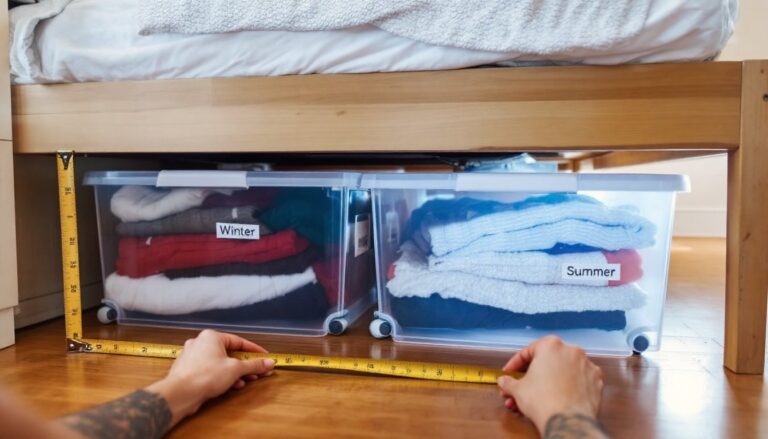
Measure your intended storage location first, shelf width, closet depth, under-bed clearance. Account for lid height when measuring vertical space: a bin with a snap-on lid adds 1-2 inches. Stackable storage solutions let you use awkward vertical gaps, but verify that your base bins are rated for the weight you’re stacking. Most plastic bins support 30-50 pounds per unit: check the manufacturer’s rating before piling winter coats on top of delicate items.
Nesting or stackable designs save space when bins are empty. If you need to tuck bins away seasonally, nesting models collapse into one another. For permanent setups, like under-bed storage or shelf filing, standard stackable bins are more stable and often cheaper.
Think about access frequency, too. Bins you reach for monthly should sit at waist height in easy-to-open locations. Rarely touched storage can go higher or deeper. Label every bin, even if contents seem obvious today: future you will thank present you.
Creative Organization Ideas by Room
Bedroom, Kitchen, and Garage Solutions
Bedroom storage thrives under beds and in closets. Under-bed bins hold off-season clothes, extra bedding, or shoes. Measure the clearance, most bed frames accommodate bins up to 6-8 inches tall. Closet shelves benefit from stackable storage bins that create compartments for scarves, accessories, and out-of-rotation items. Clear lids let you identify contents fast. For families, color-coded bins per person reduce mix-ups and speed up laundry sorting.
Kitchen organization tackles the endless gadgets, specialty tools, and spices that bury drawers. Small bins with lids corral utensils you use once a year, spiralizers, melon ballers, specialty graters. Under-sink bins, fitted with proper measurements, hold cleaning supplies safely and keep drips contained. Pantry bins organize baking supplies, snacks, or rarely used ingredients. The Kitchn offers inspiration for kitchen organization schemes that include containerized storage. Ensure lids seal properly in kitchens to prevent pest access and food spoilage.
Garage storage demands durability. Plastic or metal bins stand up to temperature swings and tool wear. Use clear bins or label everything clearly so you find hardware, fasteners, and small tools without digging through boxes. Wall-mounted shelving with bins creates a workshop vibe and maximizes floor space for vehicles or projects. Heavy bins belong on lower shelves: lighter ones go high. A labeled inventory, pencil and paper, or a phone photo, saves time hunting for lost supplies. A skinny storage cabinet might fit a garage corner for frequently accessed items.
In all rooms, dedicate bins to a single category. Mixed bins are clutter masquerading as organization. Research from Good Housekeeping and Martha Stewart highlights durable, lab-tested bins that perform across various rooms and climates.
Conclusion
Small storage bins with lids transform clutter into organized systems. Pick durable plastic, metal, or fabric that matches your environment. Size bins to your space and access needs. Label everything. And commit to the single-category rule, one bin, one purpose. You’ll reclaim usable floor and shelf space, protect your belongings, and build a home that feels calm and functional, not buried under chaos.