Table of Contents
ToggleDorm rooms come with one universal truth: they’re cramped. Between textbooks, seasonal clothing, sports gear, and the occasional contraband mini-fridge, there’s rarely enough shelf space or closet depth to keep everything organized. The floor isn’t an option either, resident advisors frown on that. The good news? The space directly beneath your bed is prime real estate that most students overlook. Under bed dorm storage transforms a dead zone into functional space that can hold months’ worth of items you need but don’t access daily. Whether you’re in a traditional residence hall or an off-campus apartment, smart storage solutions under your bed free up floor space, reduce visual clutter, and actually make your dorm feel bigger. This guide covers the best approaches to store items under your bed and how to organize them so you can actually find what you’re looking for.
Key Takeaways
- Under bed dorm storage transforms hidden space into functional organization without requiring installation or damaging your room, making it ideal for cramped 100-150 square foot dorm spaces.
- Rolling drawers work best for frequently accessed items while vacuum storage bags compress off-season clothing to one-third its original size, making a two-solution approach most effective.
- Clear labeling, inventory tracking, and categorizing items by type prevents wasted search time and maximizes the efficiency of your under bed storage system.
- Always measure your bed’s ground clearance (typically 10-12 inches in standard dorms) and account for center supports before purchasing storage to ensure everything fits properly.
- Regular maintenance including wheel lubrication, silica gel packs for moisture control, and seasonal cleaning prevents damage and keeps your under bed storage functional throughout the year.
Why Under Bed Storage Matters in a Dorm Room
A typical dorm room measures 100 to 150 square feet, roughly the size of a large garage. You’re expected to sleep, study, attend video calls, and keep clothes in this footprint, often sharing it with a roommate. Every square inch counts.
Under bed storage is invisible storage. Unlike a dresser or bookshelf, it doesn’t eat up floor or wall space, which means your room feels more open even though you’re adding storage capacity. This psychological effect is real, clutter on surfaces makes a small room feel smaller.
Secondly, dormitory rules often restrict what you can install permanently. You can’t mount shelving units without permission, and adhesive hooks sometimes violate lease terms. Rolling bins and storage bags under your bed require zero installation and zero damage deposits. You can move them in and out as needed.
Thirdly, under bed storage keeps seasonal items accessible without cluttering your daily use space. Winter coats, holiday decorations, summer shoes, they all have a home that isn’t your closet floor or the back of your door. This separation actually makes the storage itself more efficient because you’re not mixing in-season and off-season gear.
Best Under Bed Storage Solutions for Dorms
Rolling Drawers and Bins
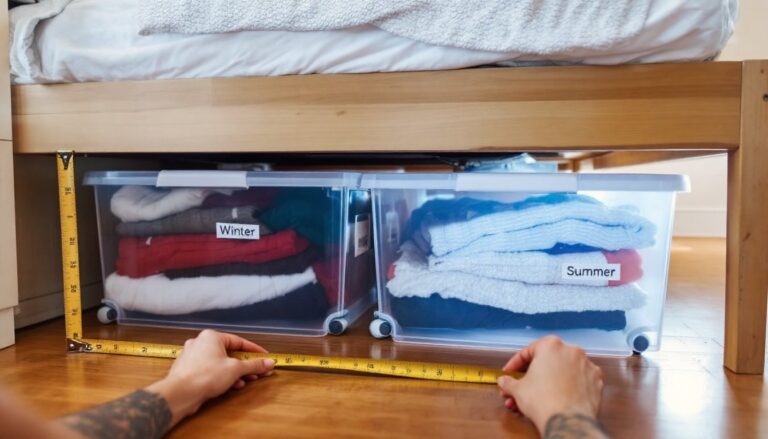
Rolling drawers sit on smooth casters (wheels) and slide easily in and out from under the bed frame. They’re the workhorse of dorm storage because they’re visible when you need something and completely hidden when you don’t. Most measure around 24 inches wide by 36 inches long by 12 inches deep, standard enough to fit under a twin XL or full dorm bed.
Plastic drawers are lightweight and usually weatherproof, which matters if you’re in a humid climate or a room prone to moisture. Metal frames with plastic bins offer more weight capacity if you’re storing books or gear. Look for units with smooth-rolling wheels: cheap casters bind up or derail after a few months. Some students use these DIY-style repurposed drawer solutions from flat-pack furniture, which can save money if you enjoy a hands-on project.
Pros: Easy access, stackable models available, and they protect contents from dust.
Cons: They take up floor space in front of your bed (which matters in tiny rooms), and wheels sometimes squeak when rolling.
Vacuum Storage Bags
These plastic bags compress your clothes and textiles to a fraction of their original size. You fold items into the bag, seal it with a zipper, and use a vacuum to extract air. A standard compression bag can hold what would normally occupy 6 to 8 inches of closet space in just 2 inches.
Vacuum bags excel at storing off-season clothing, bulk bedding, and lightweight items. They’re cheap (usually $5–$15 per bag), reusable, and require zero assembly. They stack efficiently under the bed without any structural support.
The tradeoff: once sealed, you can’t easily access one item without opening the bag. If you’re the type who needs to swap winter boots for sneakers halfway through the month, rolling drawers are better. Also, some bags lose their seal over time or if plastic gets punctured. Cheaper bags are more prone to this.
Both solutions work best in combination, drawers for frequently accessed items, bags for off-season bulk storage.
Organizing Your Under Bed Storage Effectively
Once you’ve chosen a storage method, organization determines whether you actually use it. The worst storage is the kind you forget about because you can’t find anything inside.
Start by categorizing what goes under the bed: off-season clothes, extra linens, books, sports equipment, or electronics. Group similar items together. Don’t randomly mix winter coats with summer shoes. One plastic bin per category keeps things logical.
Label everything clearly. Use a permanent marker or label maker to write on the bin or bag. “Winter Clothes” is better than “Stuff.” Add the date you sealed a vacuum bag, some fabrics can develop odors if stored too long without air circulation. Rotate stock so newer items go toward the back and older items come forward.
Keep an inventory. Write down what’s stored under your bed and where. Sounds excessive, but a simple note on your phone or a small handwritten card taped inside the bin saves 10 minutes of searching when you need that one sweatshirt. Better yet, take a quick photo of each labeled bin’s contents before sealing it.
Measure your bed frame’s height from the floor to the frame’s underside (called “ground clearance”). Standard dorm beds clear about 10 to 12 inches, but lofted beds can offer 24 inches or more. Knowing this prevents buying storage that doesn’t fit. Beds sometimes have center supports or cross beams that limit how far a rolling drawer can extend, account for that before purchase.
Keep pathways clear. If a bin or drawer blocks your door or creates a tripping hazard, rethink the layout. Dorm fire codes take safety seriously, and your RA will ask you to move anything blocking an exit.
DIY Tips for Installing and Maintaining Under Bed Storage
Most under bed storage requires zero installation, but a few tricks ensure everything stays functional and your dorm room remains livable.
Wheels and Casters: If you’re upgrading old rolling bins with better wheels, ensure casters are rated for the weight you’ll store. Cheap casters fail fast under loaded drawers. Replacement casters cost $2–$10 each and take five minutes to swap. Keep a bottle of lubricating oil handy: once or twice a year, a small drop on each wheel keeps them rolling smoothly without squeaking.
Moisture Control: Dorms get humid. Under bed storage can trap moisture, especially in plastic bags. Throw a silica gel pack or two under your bed if you’re storing textiles long-term. These dehumidifiers are cheap and reusable.
Stacking Safety: If stacking rolling bins or drawers, place heavier items on the bottom unit. Stacking light items on heavy ones creates a tipping hazard. Never stack more than two deep: access becomes impossible, and you’ll waste more time hunting for things than you save on space.
Anchoring for Lofted Beds: If your bed is lofted (raised), storage units below may shift or tip if jostled. A simple bungee cord or strap looped through the bin and the bed frame prevents rolling. This is especially important in older dorm buildings where floors aren’t perfectly level.
Cleaning: Once or twice a semester, pull everything out, wipe down the bed frame’s underside, and sweep the area. Dust and moisture settle under beds, and a quick sweep prevents buildup. If bins are plastic, a damp cloth cleans them fast. Let them dry completely before storing items again.
For creative builders, detailed DIY furniture projects and instructional guides offer plans for custom-built underbed storage with drawers or platforms. These are weekend projects if you have access to a workshop or limited tools, but they’re worth exploring if standard bins don’t meet your needs.
A full size storage bed frame is another option if you’re outfitting a more permanent space like an off-campus apartment. These integrate storage directly into the bed structure, which is cleaner than adding separate bins below.
Conclusion
Under bed dorm storage isn’t glamorous, but it’s effective. Rolling drawers handle everyday access, vacuum bags compress seasonal bulk, and smart labeling ensures you remember what’s stored where. Measure your bed’s clearance, match your storage to what you’re keeping, and maintain it once or twice per semester. In a 100-square-foot dorm room, that reclaimed space makes a real difference, not just in floor space but in reducing stress when you can’t find your notes or that pair of jeans.